The emerging science on

Mother Trees

Shade, shelter, and critical resources

Mother trees play a vital role in the health and resilience of forest ecosystems. They’re the old-growth trees that provide shade, shelter, and critical resources to younger trees, including nutrients, water, and even chemical signals that help to regulate growth and protect against disease and pests.

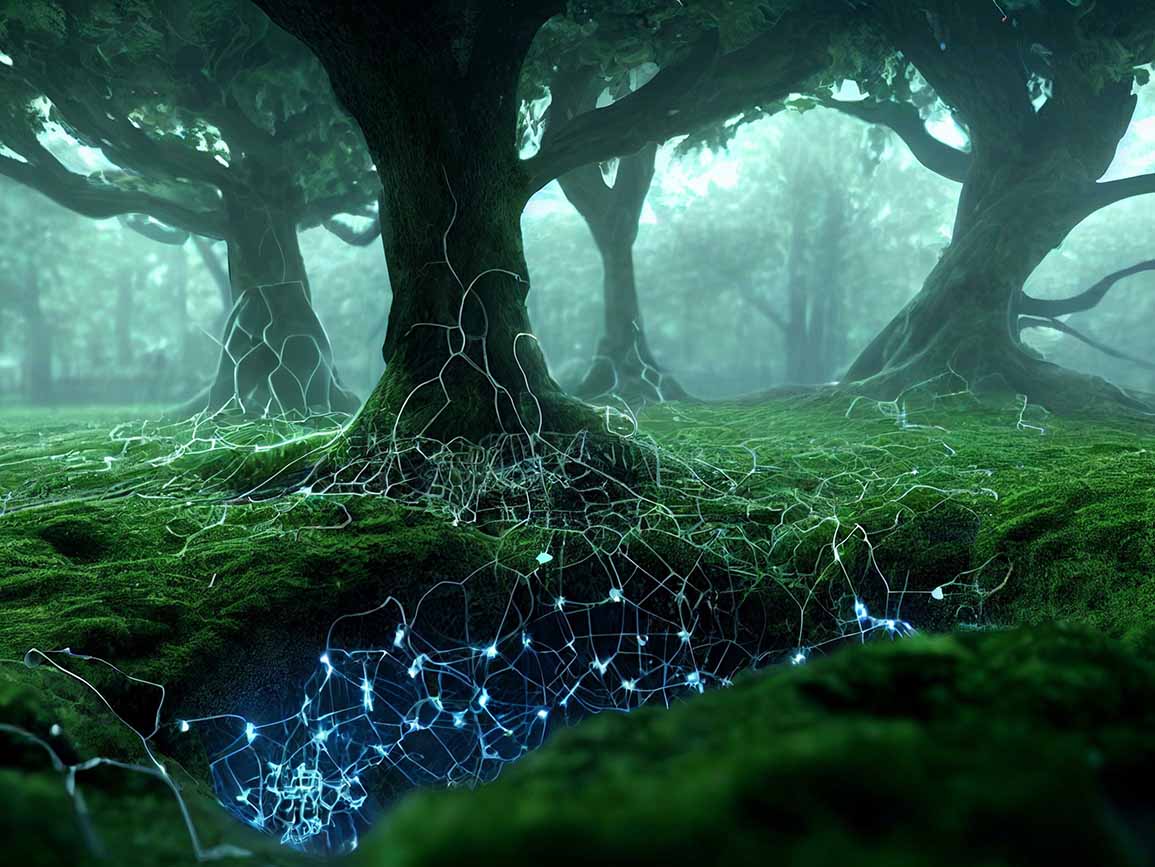
The "Wood Wide Web"

"Plants within communities can be interconnected and exchange resources through a common hyphal network" - Dr. Suzanne Simard

Researchers have found that trees of the same species will share carbon, nitrogen and phosphorus with their community based on the needs of their peers. For example, trees growing in the shade receive carbon from their sun-lit parents.

Biodiversity fosters resilience

Research has shown that plant productivity and resource utilization are significantly greater at higher plant diversity.
Old growth ecosystems are reservoirs of diversity and mother trees sustain environments that are unique. If these trees are cut down, species that are specialized to these enviroments are lost.

Sources
Simard, S., Perry, D., Jones, M. et al. Net transfer of carbon between ectomycorrhizal tree species in the field. Nature 388, 579–582 (1997). https://doi.org/10.1038/41557
Tilman, D., Wedin, D. & Knops, J. Productivity and sustainability influenced by biodiversity in grassland ecosystems. Nature 379, 718–720 (1996). https://doi.org/10.1038/379718a0
Van Dorp, C.H., Simard, S.W. & Durall, D.M. Resilience of Rhizopogon-Douglas-fir mycorrhizal networks 25 years after selective logging. Mycorrhiza 30, 467–474 (2020). https://doi.org/10.1007/s00572-020-00968-6